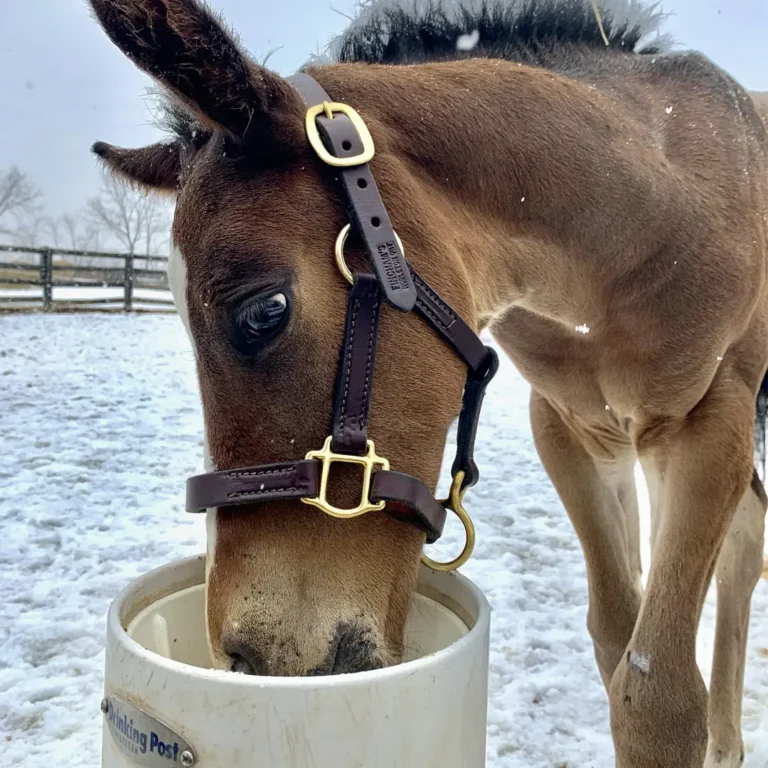

Keeping your horses hydrated in the cold witner months is very important. If your temperature takes a big drop, the required daily routine you have in place, can become daunting and time-consuming. This is why choosing a horse watering system that is able to make your routine easier, with little to no maintenance is important to you, your horses and your operation.
We made a list of frost-free alternatives by asking questions that matter most to equestrians and boarding managers.
Based on the answers from our research, we have created the list with pros and cons to each suggestion for watering your horses.
We may be biased, but the Drinking Post consistently delivers clean and fresh water to your horses every time, all without having an electricity or heating requirement. As your horse pushes the paddle, or training attachment, water fills the bowl from 18” below your local frostline. After finishing, all water is drained back through the bowl and into your leech field below the valve. Because of this, there is no standing water to freeze in the winter or grow algae in the heat of summer.
Our take on the frost-free waterers allows for the elimination of the daily chores that can consume much of your day on small farms and boarding facilities. With Drinking Post there is no more breaking ice, scrubbing algae or worrying about electricity issues.
Water temperatures in the Drinking Post stay around 50°F all year. The University of Minnesota conducted a study that showed horses consume more water when the temperature of their water remains between 45°F and 65°F. This makes the water more palatable for them and helps reduce the risk of impaction colic.
Insulated tanks take thick-walled construction and pair it with an automatic float valve for refilling. Insulation slows the heat loss from water, helping delay freezing, however, in the summer traps heat in water, making it less palatable to horses. Float valves are used to keep water levels filled without manual intervention.
This pairing allows farmers and boarding managers to reduce time spent filling tanks, but the setup is likely not going to prevent freezing during long cold fronts.
Heated waterers use a thermostat controlled element that keeps water liquid during winter. These units mount to the walls or posts, and have connection to electrical lines and the water. When temperatures get low, the heating element keeps the water from freezing.
Many heated waterers have bowls that refill when the horse drinks. This can lower energy costs compared to heating entire troughs or tanks.
Rubber tanks are able to resist cracking in cold temperatures and that makes them a more durable option of operations using outdoor pastures. When paired with a floating heater, they can keep water accessible in cold winter temperatures.
The flexible material allows these tanks to be easier to clean algae when compared to the material of other alternatives. The dark color absorbs the heat during the day and can help with natural warming of the water.
Galvanized steel have been trusted for years on farms and ranches. They are tough to handle large animals and can be ice-free during winter, when paired with a de-icer. The smooth material allows them to be cleaned of algae easily.
One thing to watch for is faulty heaters. With wires and material eroding, stray voltage can make its way into the water and cause electrocution to humans and animals.
Buried water lines are able to be placed below the frost line in your area, allow for ground temperatures to protect the pipe from freezing, if buried low enough. That means water is protected naturally before it reaches the surface.
These systems are good additions for operations that have large herds and multiple pastures because it can supply multiple watering stations.
Alternative | Electricity Required | Freeze Protection Method | Algae Prevention |
Drinking Post Automatic Waterer | No | Below-frost-line drainage | ✓ No standing water |
Insulated Stock Tank with Float Valve & Heater | Yes | Insulation + heater | ✗ Requires cleaning |
Heated Automatic Waterer | Yes | Thermostat heater | ✗ Requires cleaning |
Rubber Stock Tank with De-icer | Yes | Submersible heater | ✗ Requires cleaning |
Galvanized Steel Trough with Heater | Yes | Tank heater | ✗ Requires cleaning |
Buried Water Line with Hydrant | Varies | Geothermal ground temp | Varies by endpoint |
At the end of the day, your horses deserve constant access to clean, fresh water, and you deserve a watering system that doesn’t add more work to your routine.
If you’re tired of hauling hoses, breaking ice before sunrise, scrubbing algae in the summer, or replacing burned-out tank heaters, it may be time for a better solution.
The Drinking Post was designed to eliminate those everyday frustrations. Its non-electric, frost-free design keeps water flowing year-round without relying on heaters or electricity. Because the bowl fills only when your horse drinks and drains immediately afterward, there’s no standing water to freeze in the winter or become stagnant in the summer. Every drink is fresh.
Better yet, most horses learn to use the paddle quickly, and the naturally cool, underground water encourages consistent hydration in every season. That means less daily maintenance for you and healthier drinking habits for your horses.
Instead of spending your mornings maintaining water tanks, you can spend them doing what really matters, caring for your horses.
With a proven design, a 5-year warranty, and decades of reliable performance, the Drinking Post isn’t just another horse waterer. It’s a long-term investment in your horses, your barn, and your peace of mind.